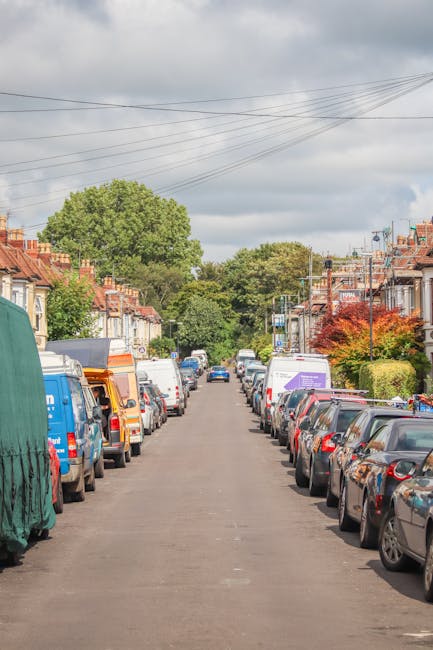
Southwark rules fines and parking for moving vans in Camberwell
If you are planning a move in Camberwell, the parking side of things can quietly become the part that causes the most trouble. The van might be booked, the boxes packed, the lift reserved. Then you arrive outside the property and realise the bay is full, the street is tight, and Southwark rules fines and parking for moving vans in Camberwell are suddenly not a theory but a very real headache.
That is exactly why this guide exists. We will walk through how parking restrictions usually affect moving vans in Camberwell, why Southwark enforcement matters, what can trigger fines, and how to plan a move that feels calm rather than rushed. If you are moving a flat near Denmark Hill, a terrace off Camberwell Grove, or an office near the main roads, the basics are similar: know the rules, plan your loading space, and avoid winging it on the day. Truth be told, winging it rarely ends well.
This is not just about avoiding a ticket. It is about reducing stress, saving time, and making sure your move actually happens without a nasty surprise on the dashboard.
Why Southwark rules fines and parking for moving vans in Camberwell Matters
Camberwell is one of those places where the street scene changes fast. A wide road can narrow into a busy residential stretch, then suddenly you are dealing with parked cars, a loading bay, or a yellow line that leaves no room for mistakes. For moving vans, that creates pressure from the very first minute.
Southwark enforces parking restrictions to keep traffic moving, protect access, and manage residential streets. That makes sense, but it also means a moving van that is left in the wrong place, even for a short period, can attract a penalty. If the driver blocks access, overstays loading time, or parks where stopping is restricted, a fine becomes more likely. In some situations, there can also be the additional cost and hassle of moving the vehicle again.
Why does this matter so much for movers? Because moving day is already full of moving parts. You are juggling keys, fragile items, building access, maybe a tired partner, and possibly a staircase that feels longer than it looked on the viewing. The parking element should not be the thing that pushes the whole day off course. Yet it often is.
There is also the simple financial side. A parking penalty can feel like a pointless extra hit when you are already paying for transport, labour, packing materials, and maybe storage. If a move has tight margins, even a single avoidable fine can be frustrating. More importantly, delays can ripple through the day and cost time that was never in the budget.
For anyone moving in Camberwell, the real lesson is straightforward: parking is not an afterthought. It is part of the move plan, just as much as boxes, tape, and route choice. In our experience, people who treat it that way usually have a much smoother day.
How Southwark rules fines and parking for moving vans in Camberwell Works
The basic idea is simple enough. A moving van can only stop or park where the local restrictions allow it, and the exact rules depend on the street, the time of day, and the type of bay or restriction in place. In practice, that means you need to check the specific location rather than assume a van can just pull up outside the front door.
Here is the practical version. Some roads allow short loading and unloading stops. Others have single or double yellow lines, permit bays, pay-and-display bays, or time-controlled restrictions. A moving van may be allowed to load in one place but not in another. The difference can come down to timing, signage, and how the vehicle is being used at that moment.
That last point matters. Loading and unloading is not the same as casual parking. If the van is actively being used to move furniture, boxes, and household goods, that may be treated differently from leaving it unattended for an extended period. But that does not create a free-for-all. You still need to stay within the local restrictions and be mindful of how long you are there.
Then there is enforcement. Southwark parking rules are typically monitored by civil enforcement officers and camera-based systems in some locations. If a vehicle is seen parked where it should not be, or if it appears to be obstructing access, a penalty can be issued. Let's face it, a loading ramp does not impress an enforcement officer on its own. The situation has to be legitimate and reasonably managed.
Camberwell also has a mix of homes, flats, schools, side streets, and busier routes. That creates real variability. A street that is fine at 11 a.m. may be awkward at 8 a.m. or during school drop-off. That is why "I'll just sort it on the day" is a risky approach. Sometimes it works. Often it does not.
If you are arranging a larger move, it can help to read broader guidance too, such as the advice on Southwark Council permits for Camberwell heavy goods removals, especially if your vehicle is larger than a standard van or you are moving bulky items.
Key Benefits and Practical Advantages
Getting the parking side right does more than avoid fines. It makes the whole move feel less chaotic. That sounds obvious, but on the day it is a big deal.
- Less chance of penalties: Careful planning reduces the risk of being ticketed for stopping in the wrong bay or overstaying a loading window.
- Faster loading and unloading: A well-placed van shortens the distance between property and vehicle, which saves time and effort.
- Lower stress: You do not spend the day worrying about a ticket on the windscreen or a complaint from neighbours.
- Better team coordination: Movers can work in a smoother rhythm when the vehicle is parked sensibly and access is clear.
- Fewer delays: A sensible parking plan helps keep the schedule tight, especially for flats with stairs or narrow access.
- Cleaner handover: If you are moving out of a rented property, good parking manners can help avoid complaints from the landlord, managing agent, or neighbours.
There is also a less obvious advantage: confidence. When the parking arrangement is settled, you can focus on the actual move. That matters more than people think. On a busy morning, confidence is fuel.
It is also worth noting that the right move setup can help protect items. If the van is parked close and correctly, boxes are carried a shorter distance, which lowers the chance of knocks and drops. Not glamorous, but very real.
Expert summary: The safest approach in Camberwell is to plan parking before the van arrives, not after. A clear loading location, checked restrictions, and a realistic time window will usually save more money than trying to improvise.
Who This Is For and When It Makes Sense
This topic matters to anyone moving goods in Camberwell, but some groups feel the impact more sharply than others.
Home movers
If you are moving from a flat, maisonette, or house in Camberwell, parking can be the difference between a calm morning and a stressful one. Narrow streets, terraces, and shared access points can make van positioning awkward. If you have furniture going up or down stairs, every extra metre counts.
Tenants and landlords
Tenants often have to move on a fixed timetable, which means less room for parking mistakes. Landlords and agents may also want the property cleared quickly, especially if there is a same-day handover. A bad parking choice can slow the entire process.
Students
Student moves are often smaller, but that does not mean simpler. Bags, boxes, monitors, and small furniture still need a legal stopping point. If the vehicle is only there for half an hour, that is still long enough to cause trouble if the bay is wrong.
Families and larger household moves
When a household move involves multiple rooms, children, pets, and fragile items, parking becomes a logistics issue. A van that is too far away adds fatigue. A van that is badly parked adds risk. Nobody needs both.
Office and business moves
For commercial moves, time is money in the most literal sense. Staff, equipment, and files need access. If you are planning a workplace relocation, it is sensible to look at a more structured approach, such as Camberwell office removals and a Southwark business moving checklist for a broader planning angle.
When does it make sense to think carefully about parking? Always, but especially if the route involves busy roads, a timed loading bay, controlled parking zones, or a property with awkward access. If you have ever carried a sofa around a corner while a car is trying to squeeze past, you already know why this matters.
Step-by-Step Guidance
Here is a practical way to handle Southwark rules fines and parking for moving vans in Camberwell without overcomplicating it.
- Check the street layout early. Look at where the van can physically stop, where it can safely turn, and whether there is room to load without blocking traffic.
- Read the signage on the exact street. Do not rely on memory or assumptions. Signs can differ from one side of the road to the other, and sometimes within a surprisingly short stretch.
- Match the vehicle to the space. A larger moving van may need more room than you first expected. If the road is tight, a smaller vehicle or shuttle-style move may be more practical.
- Plan the loading window. Think about what time of day the street is busiest, whether neighbours need access, and how long the load is likely to take.
- Keep the vehicle active, not abandoned. If the van is there for loading, make sure loading is genuinely happening and the process is organised.
- Protect the route from property to van. Clear doorways, use trolleys where suitable, and avoid bottlenecks at the pavement edge.
- Have a backup plan. If the preferred spot is taken, know your second option before the van arrives. That alone can save a lot of faffing about.
- Document any permissions or arrangements. If a building manager, neighbour, or resident has agreed to temporary access, keep a record of the details.
That sequence sounds simple, and it is. The hard part is doing it before the pressure starts. Once the driver is circling the block with a sofa waiting in the van, everything feels ten times more urgent.
If your move is likely to involve a larger vehicle or specialist handling, it can also help to review the practical service options on removal van and moving truck services so the vehicle size matches the street conditions.
Expert Tips for Better Results
A few small habits make a surprisingly big difference in Camberwell.
Book the move for the street, not just for your calendar
Some hours are much easier than others. Early daytime may be calmer than peak commute times, and some streets are less pressured outside school drop-off and pick-up periods. You do not need a perfect slot. Just a sensible one.
Walk the route if you can
If the property is nearby, take a look in advance. You will notice things a map cannot show clearly: a dip in the curb, a hidden restriction sign, a loading bay already used by local residents, or the awkward bend where a van would struggle to sit safely.
Keep the van's stop as efficient as possible
Organise boxes by room, use labels, and have the team ready before the vehicle arrives. The less standing around, the better. This is one of those unglamorous truths that saves real money.
Use the right service level
Not every move needs the same type of support. Sometimes a basic man and van arrangement works. Sometimes you need packing help, storage, or a larger vehicle. If you are unsure, the broader removal services page can help you think through what kind of move is actually realistic, not just what sounds cheapest at first glance.
Communicate with building staff or neighbours
A quick heads-up can prevent complaints and confusion. In a block of flats, it is often the difference between "fine, no problem" and "who parked this lorry here?"
And yes, sometimes the weather gets involved too. A wet Camberwell morning with boxes on the pavement is never ideal. If that happens, a well-organised loading plan matters even more.
Common Mistakes to Avoid
Most parking problems on moving day come from a few predictable mistakes. The good news? They are easy to avoid once you know them.
- Assuming the van can park anywhere: A moving vehicle is still subject to restrictions. "We're just unloading" is not a magic phrase.
- Leaving the van unattended for too long: If the driver disappears and nothing is happening, enforcement is more likely to see it as ordinary parking.
- Ignoring the exact sign on the street: This is a classic mistake. One sign can change everything.
- Using a vehicle that is too large: Oversized vans can create access problems and force risky parking decisions.
- Failing to prepare the property: If boxes are still being packed when the van arrives, the loading window stretches out and the risk goes up.
- Not leaving space for neighbours: Blocking driveways or access routes often creates complaints quickly. Very quickly.
- Forgetting about return trips: If there are multiple runs, each stop needs to be treated with the same care as the first.
One extra point: do not rely on a memory from a previous move in a different part of Southwark. Rules can be similar, but the street context is never identical. That tiny detail trips people up more often than you'd expect.
Tools, Resources and Recommendations
You do not need fancy tools to get this right, but a few practical resources help enormously.
- Street photos and mapping apps: Useful for checking bay layouts, access points, and road width before the van arrives.
- Printed move plan: Simple, but effective. Who is arriving when, where the van will stop, and who holds the keys?
- Labels and colour coding: Helps reduce time at the kerb and keeps rooms organised.
- Protective equipment: Blankets, straps, trolleys, and covers can reduce handling time and damage risk.
- Storage support: If access times are awkward, short-term storage can take pressure off the loading schedule.
For readers weighing up different moving support options, it can also help to compare service types. For example, a smaller local move may suit man and van support, while a fuller household move may be better handled through house removals. The right choice depends on volume, timing, access, and how much help you actually need.
If you are thinking about cost as well as compliance, take a look at the real cost of removals in Camberwell for a grounded view of what tends to influence pricing.
Law, Compliance, Standards, or Best Practice
Parking and loading rules are not just a courtesy issue. They sit within local traffic regulation, road safety expectations, and broader parking enforcement practice. You do not need to be a legal expert to move home, but you do need to respect the restrictions that apply on the street.
In practical terms, that means three things.
- Follow the signs and markings on site. Local restrictions control what you can do, when you can do it, and how long you can stay.
- Use loading provisions responsibly. If loading is permitted, it still needs to be genuine, active, and reasonably swift.
- Avoid blocking others where possible. Even when a brief stop is allowed, the best practice is to reduce obstruction and keep access open.
For removal work, good practice also includes insurance, careful handling, and clear communication. If you are choosing a mover, it is sensible to look at the operator's insurance and safety information and their general health and safety policy. Those pages are not just formalities. They tell you whether the business thinks about risk properly.
There is a simple standard here: if a parking arrangement feels vague, rushed, or dependent on luck, it probably needs more planning. Best practice is boring, honestly. But boring is excellent when you are trying to avoid a fine.
Options, Methods, or Comparison Table
If you are deciding how to handle a move in Camberwell, it helps to compare the common approaches. No single method suits every street or household.
| Approach | Best for | Pros | Watch-outs |
|---|---|---|---|
| Standard van stop outside the property | Short, easy access moves | Fast loading, lower carrying distance | Only works if the street allows it and access is clear |
| Pre-planned loading bay use | Busy streets and timed access | More structured, usually less chaotic | Needs careful timing and sign checking |
| Smaller vehicle shuttle | Narrow streets or restricted parking | More flexible, easier to position | May require more trips |
| Assisted move with packing and loading support | Time-sensitive or larger moves | Faster turnaround, better organisation | Costs more, but may reduce hidden delays |
| Storage-first move | Staggered access dates | Takes pressure off the move day | Extra coordination needed |
The practical choice usually comes down to the street, the building, and how much you have to move. If you live on a tighter road, a smaller vehicle and a carefully timed loading window can be far easier than trying to force a larger truck into an awkward spot. Sometimes the "cheaper" option is not cheaper after all.
For property types with awkward access, the detailed guidance in Camberwell Grove stair access removals tips for flat moves may also help you picture the carrying side of the move, not just the vehicle side.
Case Study or Real-World Example
Here is a realistic Camberwell scenario. A couple is moving from a top-floor flat near a busy residential road. They have a two-bedroom move, a sofa, a bed frame, several boxes, and a narrow stairwell. The first plan is to park the van as close as possible to the front door, load quickly, and leave.
Sounds simple. Then they check the street and realise the nearest space is a controlled bay with timed restrictions. There is also regular turnover from neighbours and visitors. If they had arrived and hoped for the best, the van might have ended up circling while the movers waited with items at the door. That is where stress and mistakes creep in.
Instead, they adjust. They choose a tighter but lawful loading position, confirm the timing window, prepare the boxes in room order, and keep a clear path from the building to the van. They also split the move into two organised phases so the most awkward furniture goes first. No drama. No ticket. Well, not much drama, anyway.
The real win is not just avoiding a fine. It is the fact that the move finishes on time, with less lifting, less frustration, and no last-minute scramble to relocate the vehicle. That is what good planning looks like in the real world. Not flashy. Just effective.
If you want another local example, the article on Camberwell Church Street flat move case study gives a useful sense of how local access planning affects the whole job.
Practical Checklist
Use this checklist before moving day. A few minutes here can save you hours later.
- Confirm the exact move date and time.
- Check the street restrictions for the property side and the destination side.
- Decide where the van will stop or load.
- Make sure the vehicle size suits the street.
- Prepare labels, tape, blankets, and straps.
- Keep key documents and access codes to hand.
- Tell neighbours or building staff if access may be briefly affected.
- Plan who will direct the van if space is tight.
- Pack essential items separately so they are not lost in the rush.
- Build in a little time buffer. Honestly, you will probably need it.
Quick rule of thumb: if you have not thought about where the van stands before the first box is lifted, you are already behind.
Conclusion
Southwark rules fines and parking for moving vans in Camberwell can look like a small detail, but in practice it shapes the whole moving day. The right parking choice saves time, protects your schedule, and helps you avoid avoidable penalties. The wrong one can make an already busy day feel twice as long.
The safest mindset is simple: check the street, match the vehicle to the access, keep the loading process moving, and never assume the best spot will just be there waiting. With a bit of planning, Camberwell moves can be managed neatly, even on streets that feel tight at first glance. That is the part people often forget. It is not about perfection. It is about being prepared enough to stay calm.
If you want help planning a move that respects local parking limits and keeps the day running smoothly, now is a good time to compare your options and get a clear quote.
Get a free quote today and see how much you can save.
Frequently Asked Questions
Can a moving van park on yellow lines in Camberwell?
Sometimes loading or unloading may be allowed in restricted areas, but it depends on the specific street, the signs, and whether the vehicle is actively loading. Do not assume yellow lines are automatically fine. Check the location carefully.
What causes fines for moving vans in Southwark?
Typical reasons include parking in a restricted bay, overstaying a loading window, blocking access, ignoring sign instructions, or leaving the vehicle unattended where it should not be. Even short mistakes can lead to penalties.
Do I need a permit for a moving van in Camberwell?
Not always, but some streets, vehicles, or loading arrangements may require specific permissions or careful coordination. The safest approach is to plan early and check the exact street conditions rather than rely on a guess.
How long can a moving van stay while loading?
There is no single answer that applies everywhere. The allowed time depends on the restriction in place and the local rules for that street. Keep the loading active and efficient, and avoid overextending the stop.
What is the best time of day to move in Camberwell?
Often the calmer periods are outside peak commuter times and school rush, but the best slot depends on your exact street and building access. Early planning usually matters more than the perfect hour.
Can I use a larger removal truck instead of a van?
Yes, if access and street conditions allow it. But larger vehicles can be harder to park or load in Camberwell, especially on narrower roads. Sometimes a smaller van is simply the smarter choice.
What should I do if the loading spot is taken?
Have a backup location in mind before the vehicle arrives. If the preferred space is gone, use the next safe and lawful option, even if that means a slightly longer carry. It is better than forcing a bad stop.
Does moving furniture count as loading?
Usually the distinction depends on whether the activity is genuine loading or unloading and whether it is being done continuously and reasonably. A van sitting idle is a different matter. If in doubt, keep the process moving and stay within the rules.
How can I reduce the risk of a parking fine on moving day?
Check the signs in advance, plan the vehicle size carefully, make sure the loading area is ready, and keep the process efficient. If possible, avoid improvising at the kerb. That is where most problems start.
Is it worth booking professional help for a tight Camberwell street?
Usually yes, if access is awkward, the move is time-sensitive, or you have bulky furniture. A good removal setup can save time and reduce the risk of a parking mistake. It also takes pressure off you, which is no small thing.
What if my move runs over the planned time?
Build in a buffer from the start. If delays happen, prioritise the most important items, keep the van use active, and avoid drifting into a casual parking situation. A little margin can prevent a lot of stress.
Where can I learn more about moving options in Camberwell?
You can explore different move types, planning advice, and local service pages such as home moves, flat removals, and student removals depending on your situation. The right setup depends on the property, the route, and how much you need to shift.